Real Estate · Riyadh Daily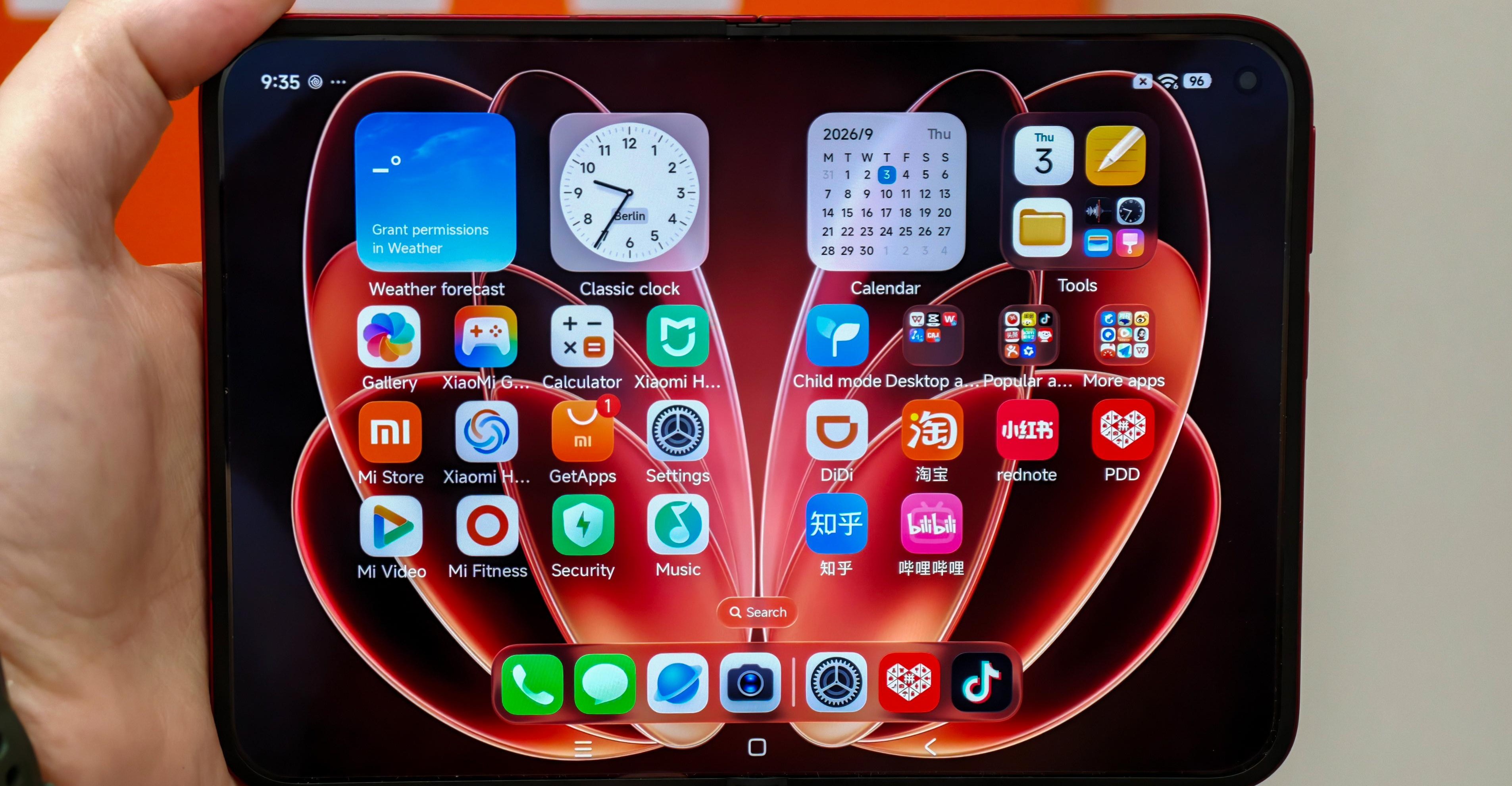
Xiaomi is the latest manufacturer to release a short, wide foldable phone, in the same week Apple is expected to do the same. I got to try the 18 Fold behind closed doors at IFA last week. While it looks and feels similar enough to Samsung’s Galaxy Z Fold 8, Xiaomi’s phone goes further: it’s both shorter and wider than Samsung’s, with a roughly 1.4:1 aspect ratio on both the 7.58-inch inner and 5.38-inch outer screens—almost matching international paper sizes and IMAX screens, making it the first phone capable of playing *The Odyssey* without letterboxing.
The 5.38-inch screen has generously rounded corners. Both screens have nearly identical aspect ratios, making the Z Fold 8 appear taller and slimmer. In practice, it remains compact and pocketable when closed, with a comfortable cover screen for single-handed use, though some apps may run awkwardly on the shorter screen.
When open, it’s ideal for movies or ebooks but less suited for multitasking work, though Xiaomi includes split-screen apps and floating windows for multitasking. While Samsung may have an edge in build quality, the 18 Fold looks great in black, white, red, or a limited-edition pink ceramic version. However, it’s slightly heavier and thicker than the Z Fold 8, lacks an IP rating, and has a more noticeable crease than Samsung’s latest foldables.
Xiaomi’s triple camera setup, backed by a Leica partnership, includes a 200-megapixel main sensor, a 50-megapixel 3.5x periscope telephoto, and a 50-megapixel ultrawide lens. The phone features Xiaomi’s Xring O3 chipset, promising Snapdragon 8 Elite-level performance, paired with Arm’s Mali G2-Ultra NX GPU for DLSS-style graphics acceleration. The 6,000mAh battery supports 67W wired and 50W wireless charging, and both OLED displays reach up to 4,000 nits of peak brightness.
Xiaomi’s foldable software features are not unique, but the specs—including the first Xiaomi phone with its own Xring O3 chipset—stand out. The 18 Fold is priced at ¥10,999 (~$1,600) in China, with official sales on September 10th, though its international launch remains uncertain. Xiaomi has positioned itself as a competitor to Samsung and Apple, laying down a challenge in the foldable market.
Source: The Verge