Real Estate · Riyadh Daily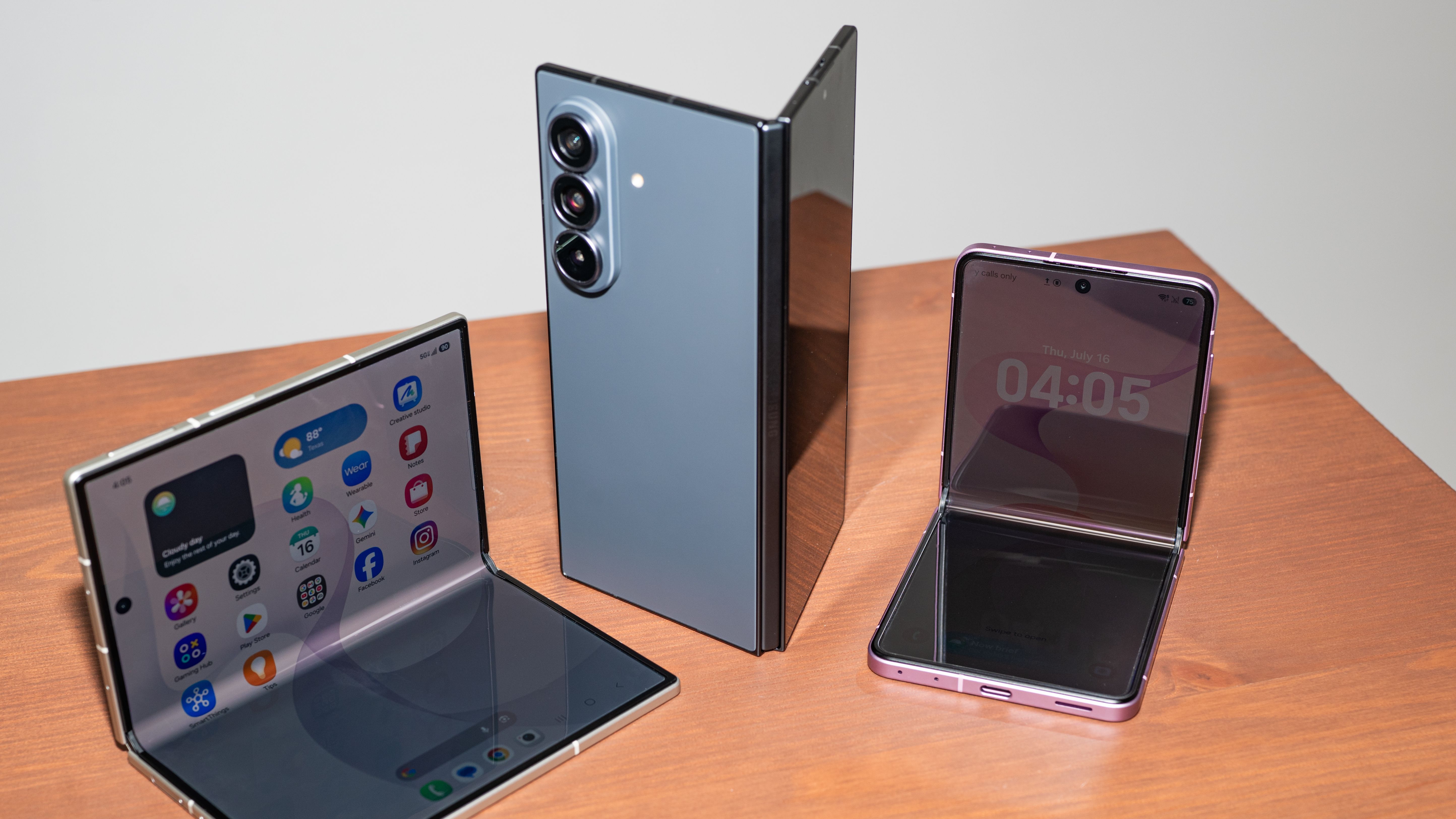
On the eve of Apple’s highly anticipated folding iPhone, Samsung isn’t feeling threatened. Instead, the folding smartphone pioneer says the competition is ‘absolutely welcome’. That’s according to Hee-Cheul Moon, head of Samsung’s advanced mechanical R&D group, who sat with WIRED on a virtual Zoom call with Seungki Choi, head of Samsung’s smartphone R&D group.
Before the talk veered towards Apple, the pair spoke about how Samsung managed to shave 75 grams off the weight of its latest Galaxy Z Fold8 in seven years since it debuted the original. Weight is integral to a folding phone’s success. If the device is too chunky and heavy, users are less likely to want to use it. Over the past two years, folding devices from Honor, Google, and Samsung have rapidly gotten lighter, with each iteration featuring thinner designs.
Samsung saw preorders for its latest folding handsets increase 30% globally versus last year’s models, with the Fold8—the device with a new smaller shape that’s easier to hold—accounting for nearly half. ‘Seeing these other brands entering the market, we feel very proud of ourselves that the value we pioneered with this new category of foldables is being acknowledged and recognized,’ Moon says through a translator.
When asked what advice Samsung had for Apple ahead of its folding debut, Moon said, ‘The key to providing the highest customer value in this market is all about the weight of the device. As you know, it’s not easy.’ Apple’s folding iPhone, rumored to be called the iPhone Ultra, is expected to weigh between 230 and 241 grams, heavier than Samsung’s latest Galaxy Z Fold8.
Samsung has made notable strides this year in making its main Galaxy Z Fold8 smartphone lighter than top-end candy-bar-shaped smartphones. The single-screen Galaxy S26 Ultra weighs 214 grams, but the Fold8 is only 201 grams, thanks to its smaller, passport-style shape. The company says its own customer data and YouGov survey data from 2024 show that bulky designs were a chief concern for people uninterested in folding phones.
Samsung analyzed every single component in the latest Fold8 and Fold8 Ultra—approximately 270 components and more than 180 auxiliary parts—from circuit boards and antennas to tapes and fastening components. The team redesigned the printed circuit board to remove unnecessary circuits and improve component layout, reducing space requirements. Samsung eliminated 15 auxiliary parts and machined the internal display support plate down to roughly 0.2mm.
To keep the thinner panel durable, Samsung developed its ‘Flex Titanium’ screen—a titanium alloy film roughly one-third the width of a human hair designed to maintain surface flatness and prevent crease worsening over years of folding. Samsung’s primary folding phone no longer has three cameras on the back. Instead, it uses a dual-camera system: a main camera and an ultra-wide, with no telephoto. For those needing high-end zoom and a 200-megapixel primary shooter, Samsung points to the larger Galaxy Z Fold8 Ultra, framing the Fold8’s camera cutback as an intentional concession to deliver a lightweight, passport-style design.
Apple’s folding iPhone is also expected to have a wider and shorter passport-style shape and likely a similar camera setup. Both Apple and Samsung made similar concessions last year to chase ultra-thin and light smartphones. Choi says this came down to user feedback as Samsung’s customers wanted a folding device that was ‘effortlessly portable’ yet could be unfolded for an immersive multimedia experience.
‘We continue to always monitor the voice from the market, and we are open to any possibilities,’ he says. The Fold8’s new shape is tailored for media consumption with less letterboxing than previous models. However, the slim, lightweight profile leaves foldables exposed where traditional flagships excel: durability and ingress protection. Most candy-bar smartphones sport an IP68 rating for dust and water resistance, but the Galaxy Z Fold8 series remains at IP48, meaning it can get wet but dust will cause problems.
Dust forced Samsung to delay the launch of the first Galaxy Fold in 2019, as specks could damage the screen. Google’s folding Pixels are the only models with an IP68 rating. Even with higher ratings, dust can still pose a problem, according to Elizabeth Chamberlain, iFixit’s director of sustainability. iFixit’s teardowns show dust can get inside the Pixel 11 Pro Fold, causing a ‘crunchy’ hinge sound and potential long-term damage. ‘We still haven’t seen a solution for that,’ Chamberlain says. The Galaxy Z Fold8 received a 4/10 for repairability in iFixit’s teardown, with the hinge being the most vulnerable component.
Despite durability concerns, Samsung’s engineers believe they’ve found the right formula. When asked what device everyone in the room was using, a sea of Galaxy Z Fold8 models appeared. Moon held up both the Z Fold8 and the Fold8 Ultra, smiling and saying, ‘We use the Fold8 Ultra as well.’
The broader foldable market has seen a double-digit decline over five consecutive quarters, but Nabila Popal, senior research director at International Data Corporation, says this niche is stabilizing. The upcoming iPhone is expected to help the category grow nearly 13% year over year, marking the only growth in the smartphone market. Drew Blackard, Samsung’s senior vice president of mobile product management, previously told WIRED that more competition will help bring visibility to the category. Popal argues foldables are more durable and dependable now, suggesting Apple is entering a market where hardware anxieties have eased.
Chamberlain remains skeptical about the category’s maturity. ‘I want a phone that is durable and repairable, and I think it’s highly unlikely that Apple will have solved the hinge problem,’ she says. Despite unresolved durability questions, Samsung’s engineers are confident in their design formula.
Source: wired.me