Real Estate · Riyadh Daily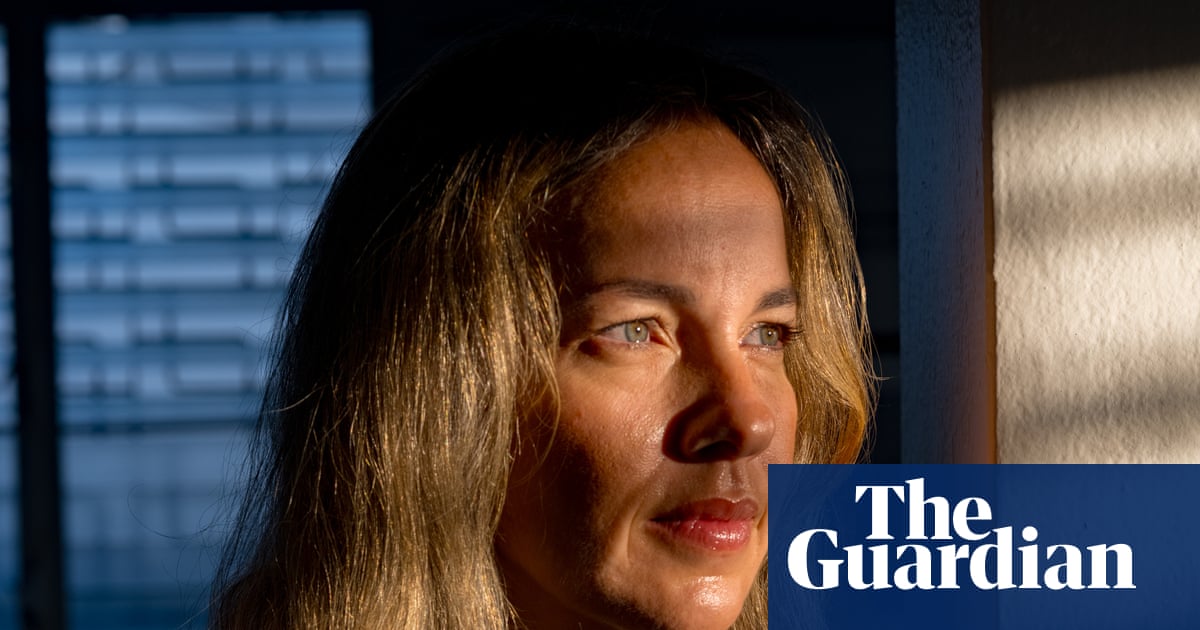
Dhara Rivera de Jesús keeps at least 30 large water containers in her home at all times. After more than a year without consistent service in San Juan, Puerto Rico , she fills them whenever water returns, which sometimes only happens for a handful of hours every few days. Going without reliable water to bathe, flush toilets or cook has affected her ability to work and stick to a usual routine – a catch-22, now that she has to spend more money and time buying water and prepared food.
This summer, water levels in the island’s key dams fell below the thresholds needed to supply about half a million residents, leading to a severe drought that prompted Puerto Rico’s governor, Jenniffer González-Colón, to declare a state of emergency. But residents of San Juan, including Rivera, had already spent months grappling with water insecurity as the archipelago’s ageing and deteriorating infrastructure continued to fail amid government mismanagement. The water crisis has only amplified residents’ frustrations at the Puerto Rican government’s lack of solutions to protect the archipelago’s water.
For example, the planned luxury development called Esencia is expected to consume more than a million gallons of water on the south-western tip of Puerto Rico, where residents have for years been grappling with intermittent service. Some local activists have also pointed out that the government could require residents to install rainwater catchment systems , which could provide millions of gallons of water a year. Dhara Rivera de Jesús always keeps a reserve of water for her family, a common household practice in Puerto Rico.
“We recognize the drought, but we also recognize that there is an intellectual drought,” Rivera said. Rivera and Alfredo Cuyar, residents of the San Juan neighborhood of Santurce, formed the Coalición Exigimos Agua (We Demand Water Coalition) in October. Their demands to the government were clear: residents want reliable water service.
The coalition has since organized protests that have gathered thousands of Puerto Ricans on the archipelago, while diaspora communities in the continental US have followed, protesting in New York and Philadelphia against Esencia and the water crisis. “The level of frustration among citizens regarding essential services and social issues is growing,” Cuyar said. Other groups, including the feminist-focused Colectiva Feminista en Construcción, founded in 2014, have also joined the call for reliable water, alongside political groups such as the Movimiento Socialista de Trabajadores y Trabajadoras, La Jota and Se Acabaron Las Promesas.
In August, several of these groups protested outside two hotel events hosted by González-Colón to celebrate her birthday and raise campaign funds. On Labor Day, dozens of people protested in San Juan to demand sweeping changes to the archipelago’s water infrastructure, as well as to the management of Puerto Rico’s Aqueduct and Sewer Authority (Prasa). Even Bad Bunny labeled the water crisis as a government attempt to sell “off the island piece by piece and fulfill their mission of a Puerto Rico without Puerto Ricans”.
A dam in Puerto Rico with low water levels “Water should not be a luxury or a privilege, but rather something assured and guaranteed,” said Verónica Figueroa Huertas, a member of the Colectiva Feminista en Construcción. “For us, as for many people, it is the government that needs to respond to this.” ‘They want to normalize what isn’t normal’ Water scarcity is just the latest in a long list of economic and political afflictions facing Puerto Rico, a US territory since 1898. Recurrent power outages, a crumbling healthcare system and austerity measures implemented by Puerto Rico’s financial oversight board – which has overseen the island’s fiscal affairs since 2016 – are among the factors pushing Puerto Ricans to leave.
This exodus is a major theme in Bad Bunny’s hit album DeBÍ TiRAR MáS FOToS, meaning “I should have taken more photos”, channeling the yearning of those who have left and appreciating those who stay in Puerto Rico despite its hardships. Local law enforcement and community members arrive at a protest organized by the Coalición Exigimos Agua near San Juan’s busiest highway for a roadside rush-hour protest on 7 September 2026. Now, years of systemic mismanagement have left Puerto Rico facing one of its worst water crises since 2015.
Drinking water stations were set up in a handful of municipalities affected by the water shortages, and the national guard was also activated to set up trucks with water tanks. The governor has urged residents to “be prudent” with their water usage and, in August, said: “This situation is out of our hands.” But for the island’s 3.2 million residents, rationed water, pricy cisterns and eating out are hardly a solution, particularly when 37% of the population lives below the federal poverty level. “They want to normalize what isn’t normal,” said Rivera.
“Not everyone has the money to buy a cistern.” A major inflection point occurred in June, when an aqueduct rupture left more than 100,000 customers without water. After the driest July on record and dwindling water levels, residents of San Juan and surrounding areas were forced into rotating 48-hour water shut-offs, leaving more than 180,000 homes without public access to potable water. “In this area, we all used to have water 90% of the time,” Cuyar, who lives in Santurce, said.
“Now, having water is the exception. This is a political and management issue.” Community members join a protest demanding increased water security and government accountability in San Juan, Puerto Rico, on 7 September 2026. Prior to the recent ruptures, nearly 60% of the water treated by the aqueduct and sewer authority was lost, primarily due to “inaccurate meters, unauthorized water consumption, or water main leaks”, according to a 2019 report on the island’s infrastructure prepared by the American Society of Civil Engineers.
“The water crisis in Puerto Rico is not the result of one drought or one infrastructure failure; it is the result of federal neglect and mismanagement,” said the congresswomen Alexandria Ocasio-Cortez and Nydia Velázquez in a statement . “Governor González has claimed that ‘this situation is out of our hands’. We reject this characterization.” Protests in recent months have been building on their demands to the government, including immediate attention to the waste of water resources amid the leaks and a halt to new construction permits in areas with frail water infrastructure.
In a letter to Prasa’s president in August, the resident commissioner of Puerto Rico, Pablo José Hernández Rivera, requested detailed information on federal funds available for the utility and a breakdown of how much water is lost in the system, among other requests. “This administration has done nothing to resolve the issue,” Cuyar said of the aqueduct leaks. “Whether it is because they lack crews or simply fail to assign them, it is an area that requires a great deal of attention.” A protester holds a sign saying ‘Santurce deserves water’ in San Juan, Puerto Rico, on 7 September 2026.
Fighting displacement of working-class locals For Beatriz Llenín Figueroa, the problems unfolding in San Juan are a reverberation of a fight happening in Cabo Rojo, about a two-and-a-half-hour drive west, over the proposed construction of Esencia, a 2,000-acre (809-hectare) mega-resort and residential complex where homes are slated to start at $2m. Where exactly the complex will source its water remains unclear, but lawmakers, non-profit organizations, and residents alike have raised concerns over the potential damage to the zone’s ecology and the strain on an already frail water system. “On any long weekend, we either run out of water or are left with low water pressure,” said Llenín Figueroa, spokesperson for the Coalición Defiende a Cabo Rojo (Defend Cabo Rojo Coalition).
“Since they want to turn everything into merchandise, we find ourselves in the situation we are in.” A natural spring in the hills outside San Juan has long served as key lifeline to locals during water crises in Cupey, Puerto Rico, on 7 September 2026. Even economists warn that the jobs created by Esencia would not compensate for the potential damages, leading to a net economic loss in the long run. “Due to its scale and luxury-market orientation, Proyecto Esencia would increase pressure on housing in Cabo Rojo, exacerbate the risk of displacement and foster an enclave economy with limited ties to local productive activity,” reads a statement from Héctor Tavárez Vargas, president of the board of directors of the Puerto Rico Association of Economists.
Echoing this, Llenín Figueroa said that, aside from the ecological and economic risks, Esencia poses a threat to the community of caborrojeños who have lived in the area for generations. Many fear that Esencia will have the same effect as similar resorts and residences had in the municipality of Dorado, where luxury real estate has lured wealthy foreign investors to an archipelago that has gradually become more expensive for the average Puerto Rican. A roadside rush-hour protest demanding water access and government accountability in San Juan, Puerto Rico, on 7 September 2026.
“Cabo Rojo and the south-western region in general have a deep-rooted history that is primarily working class,” she said. “These people intend to create a luxury development here; that doesn’t compare to a parador ” – a local inn – “in Boquerón. The level of consumption of one versus the other doesn’t compare.” For Rivera, the problems in her neighborhood and Cabo Rojo speak to the same issue: a lack of response from the government amid major threats of the climate crisis and displacement.
“Human beings must reflect on their actions in order to leave a future for coming generations,” Rivera said. “The Earth is speaking.”
Source: The Guardian